ideas Allowing an Idea to go Out of Control By natural instinct, most people and organizations tend to get defensive and protect their ideas and products when they start to go beyond their control. I'm not talking about Blockbuster who refused to move forward when it was clear that their model of movie rental were about to
iOS Present iOS 8 Share Extension as Modal View I was having a little fun creating a share extension for iOS 8 [https://developer.apple.com/library/ios/documentation/General/Conceptual/ExtensibilityPG/ShareSheet.html#//apple_ref/doc/uid/TP40014214-CH12-SW1] in Swift. One problem I quickly stumpled upon was the need to get rid of the storyboard [https://martinnormark.com/
design Fall in Love with the Problem - get over the Solution We've all been seduced by the awe of a genius and beautyful solution to a problem. As developers and entrepreneurs we just love new technology and simple solutions, and we often jump right into the beauty of the solution with little to no consideration about the problem you&
iOS Is $19.99 the new $3.99 for iOS apps? A lot of data has recently been shared about revenue numbers of popular iOS apps. Overcast [http://www.marco.org/2015/01/15/overcast-sales-numbers], Manual [http://williamwilkinson.com/post/108282752431], Dash for Mac [http://blog.kapeli.com/my-year-in-review-2014], Unread [http://blog.jaredsinclair.com/post/93118460565/a-candid-look-at-unreads-first-year] and Monument Valley [http:
integration Integration as Marketing In regard to iOS apps, this is not as relevant as it was before the app-to-app integration features of iOS 8. Basically instead of just integrating another app/product with your own, you contact the vendor and ask them for a promotion on their blog, integrations page and e-mail list
programming Programming books Programming books or just books on the topic of developing software, are a great source of inspiration. If you’re a software developer or you work at a software company, maybe this reading list have some exciting books for you too. My reading list consists of books that I’ve
iOS A couple of iOS and Mac developer tools I can't live without I just updated my config [https://github.com/martinnormark/config] on GitHub and added a few iOS and Mac [https://github.com/martinnormark/config/commit/b3a4ae3c69fb37b58c52085ddf9e8ef4aaf01da4] developer (and design) tools that I can't live without. First of all there's PaintCode [http://www.paintcodeapp.com/] - the
log files The Mystery of The Logger The logger is a huge mystery. You see and use it all the time. At the top of your class, a controller, a window, a backend service or within each method. It's the black box that everyone says is so important to use, and you spent time with
iOS Awesome Tools when adding Push Notifications to iOS Apps One of the greatest strengths of the ecosystem of iOS is the vibrant community of developers and a wide range of open source libraries and tools. There's a ton of goodness for both Objective-C [https://github.com/trending?l=objective-c] and Swift [https://github.com/trending?l=swift]
C# How To Get Expiration Date of Azure Mobile Services Auth Token This is another post about Custom Authentication in Azure Mobile Services [https://martinnormark.com/how-to-do-custom-login-in-azure-mobile-services/]. Recently I also wrote about how the get the user logged in (owner of the auth token) [https://martinnormark.com/getting-logged-in-api-user-in-azure-mobile-service/] and all the code is available in my "Bootstrap Azure Mobile Services"
business Power Metrics I learned computers and software by starting with the hardware. I grew up in the 80'ies, so it wasn't until I was about 10 years old I got my first introduction to computers. Very quickly I learned the game of comparison. How many MHz (yes, not
design UX Trust I've been paying a lot of attention to my behavior and expectations when using different kind of products. It may be web or mobile apps, but anything from a refrigeator to a car also delivers a user experience (UX) that you either like or dislike. Let's
C# How to do Custom login in Azure Mobile Services About a week ago I introduced ZuMo.API [https://github.com/martinnormark/ZuMo.API] which is a Windows Azure Mobile Service (ZuMo) that was configured with a custom login provider that takes a username and password. Today I want to show how you actually login to the API (remember that
C# Getting logged in API user in Azure Mobile Service Last week I published ZuMo.API [https://martinnormark.com/introducing-zumo-api-a-bootstrapper-for-windows-azure-mobile-services/] to GitHub [https://github.com/martinnormark/ZuMo.API] which is a simple Windows Azure Mobile Service (using the .Net backend) that includes Custom Authentication instead of solely relying on Active Directory or login via Twitter, Facebook, Google or Microsoft. Today
design Turn around the order of incentives Give before you take. Let a visitor book their treatment before requiring email and phone number. They'll feel like they've gotten something in return for their work (the success of a finding vacant time) before they give you something (their e-mail address, name and perhaps credit
iOS The Art of Timing "Ask to Buy" requests in iOS 8 One of the news in iOS 8 was family sharing [https://www.apple.com/icloud/family-sharing/], and more specific to this blog post the new purchase requests [http://mashable.com/2014/06/02/ios-8-family-share/] where kids can ask their parents for permission to buy stuff in the App Store or
iphone iPhone as an API endpoint for SaaS Apps I have a couple of small iPhone apps that each solve a real pain for me. They do it in a simple manner, gets out of their way so I don't have to care. I'm comfortable with the apps handling my data, and I have some
work Async Chat and The Rise of Bots It’s quite fair to say that Slack [https://slack.com/], the team collaboration service that launched not that long a go, is on a roll. It has become the choice for asynchronous collaboration among tech companies, and their rich suite of integrations [https://slack.com/integrations] makes it even
design Mental Model vs. Implementation Model One of the most useful concepts of UX and product design I've learned, is the difference between a mental model and an implementation model. As programmers we have a tendency to think in technical, modular terms which is an implementation model. What does the implementation of this feature
iOS Setting up a new Mac for Web and iOS development I've probably done at least 500 re-installs of Windows during my time. I did start at an early age, but none the less a lot of hours has been spent just setting up a machine. I've learned a lot, of course. Not by re-installing - but
cloud Introducing ZuMo.API - Bootstrap Azure Mobile Services with Custom Authentication A couple of days ago, I wrote about some issues I had when updating a Windows Azure Mobile Service [https://martinnormark.com/updating-a-windows-azure-mobile-services-project/] to the latest Nu Get Packages. Today I'm releasing ZuMo.API [https://github.com/martinnormark/ZuMo.API] - a small bootstrapper project for setting up
design Anti-aliasing issues in UITextField with Blur and Vibrancy Effect You probably know these days when you end up spending quite a lot of time fixing a small detail. At times you just feel like giving up and taking another direction. But I really wanted to use the new UIBlurEffect [https://developer.apple.com/library/prerelease/ios/documentation/UIKit/Reference/
software Software and Leadership To me the purpose of software should be to drive change that you believe is right for you, your group or organization. Software in the Enterprise should underline and support your cause, and the process you want to establish. By default, it's pretty open to anyone to work
ideas Knowing business is not the point When people talk about the success of others, especially known entrepreneurs who won big and cashed out, they often try to diminish their success by saying they did it on a cheap background, got lucky or had others do it for them. I keep hearing a phrase like "he&
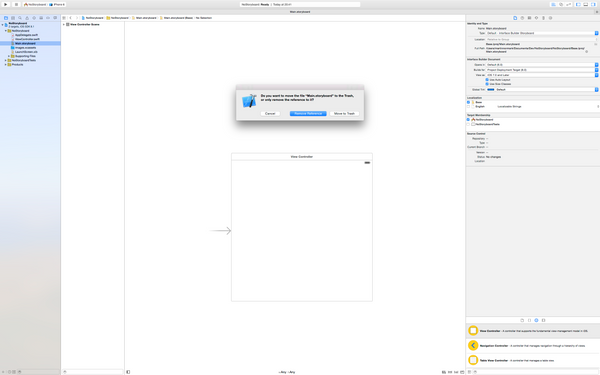
iphone The Story of no Storyboard in iOS Development When I create a new iOS project in Xcode, being iPhone/iPad only or universal, the first thing I do after creating the project is delete the Storyboard. And no, I don't delete the Storyboard because I want to use XIBs instead - I keep away from Interface